Why manufacturers rely on an Aluminum Casting Company
Wiki Article
Recognizing the Procedures Entailed in Aluminum Casting for High-Quality Production
The aluminum casting process is a complicated yet crucial treatment for achieving top quality manufacturing. It entails several stages, consisting of mold and mildew preparation, melting, putting, and air conditioning. Each action calls for cautious attention to information to avoid problems and guarantee consistency. Understanding these procedures can considerably affect the end product's stability. As one analyzes the subtleties of mold choice and air conditioning techniques, the significance of each aspect ends up being significantly clear. What factors truly determine success in this elaborate process?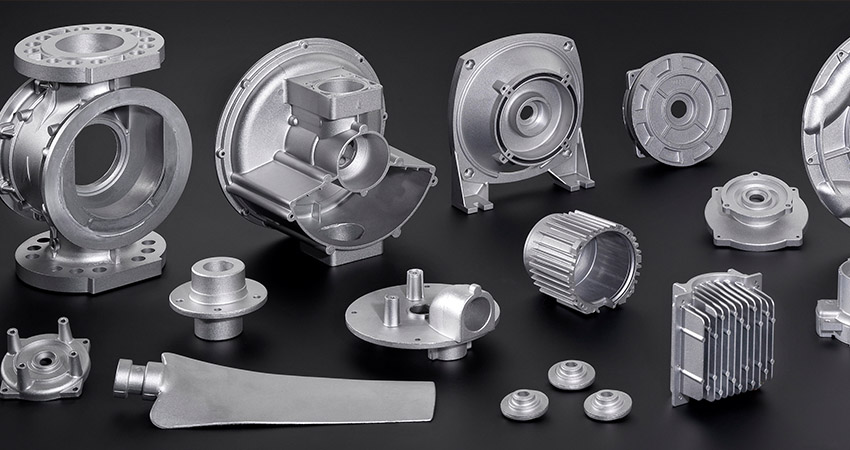
The Aluminum Casting Process Summary
The aluminum casting process is a widely utilized manufacturing technique that transforms molten aluminum into different shapes and elements. This process starts by heating aluminum until it gets to a liquid state, enabling it to flow easily right into mold and mildews. Relying on the desired final result, various casting techniques can be used, including sand casting, pass away casting, and investment casting. Each approach has its special benefits and applications, influencing factors such as production volume, dimensional precision, and surface area finish.As soon as the aluminum is put right into the mold and mildew, it strengthens and cools, handling the form of the dental caries. After cooling, the actors piece is eliminated from the mold and mildew, usually requiring extra procedures like cutting, machining, or surface area treatment to accomplish the final specifications. Generally, the aluminum casting procedure is crucial in producing resilient and elaborate parts for numerous sectors, including automobile, aerospace, and durable goods.
Preparing the Mold And Mildew for Casting
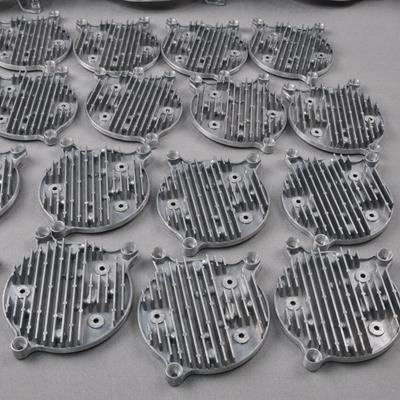
Mindful prep work also includes cleaning up the mold and mildew to get rid of any kind of impurities that can influence the casting process. A comprehensive examination warranties that all parts fit together effectively, avoiding imbalances throughout pouring. Additionally, applying a launch agent can aid reduce the elimination of the completed product.
Ultimately, careful focus to information during mold and mildew preparation establishes the structure for a successful casting operation, affecting aspects such as dimensional accuracy and surface area quality of the aluminum elements produced.
Putting and melting Aluminum
Reliable melting and pouring of aluminum is vital for attaining high-grade castings. The procedure begins by selecting the suitable heater, which need to offer effective warmth transfer and maintain consistent temperature levels. Various types of heating systems, such as induction or crucible heating systems, can be made use of based on manufacturing demands and quantity.The aluminum should be warmed to its melting factor, commonly around 660 degrees Celsius (1220 levels Fahrenheit), while guaranteeing marginal oxidation and contamination. To improve quality, additives may be presented to enhance fluidity and lower contaminations. As soon as fully thawed, the aluminum must be held at a secure temperature level prior to pouring.
Putting calls for precision to avoid flaws such as air pockets or incorporations. Using putting ladles and regulated putting methods contributes to a smooth circulation right into the mold and mildew. Proper execution of these steps is crucial for producing castings with optimal architectural integrity and surface area coating.
Cooling and Solidification Strategies
After putting, the cooling and solidification of aluminum play an important duty in establishing the final homes of the casting (Aluminum Foundry). Efficient cooling techniques straight affect the microstructure, mechanical residential properties, and dimensional precision of the final item. Usual techniques consist of compelled air cooling and water spray, which promote uniform temperature distribution and minimize thermal slopesThe solidification process begins as the molten aluminum loses warm, shifting from liquid to solid. The price of cooling down influences grain size; slower cooling can lead to larger grains, potentially reducing strength. In addition, using chills-- steel inserts that take in warm-- can boost cooling rates in certain areas, boosting general honesty.
Controlled cooling systems are usually applied to achieve wanted buildings, such as improved ductility or strength, by managing the cooling curve. Correct techniques assure reputable aluminum castings that fulfill stringent market standards.
Finishing and Top Quality Control Procedures
Ending up and top quality control measures are vital to guarantee that aluminum spreadings fulfill the called for specs and efficiency requirements. After the casting process, components undertake numerous finishing procedures, including machining, grinding, and polishing. These procedures improve surface area quality, dimensional precision, and total aesthetic appeals.Quality assurance procedures play an essential role in assuring item honesty. Examination methods such as aesthetic evaluations, dimensional checks, and non-destructive screening are utilized to identify problems like porosity, surface area abnormalities, or dimensional errors. Furthermore, complete paperwork of each phase of manufacturing helps trace any problems back to their resource, making aluminum casting it possible for constant renovation.
Utilizing statistical process control (copyright) more guarantees that production processes continue to be within defined limitations, boosting consistency and integrity. By integrating completing methods and rigorous quality assurance procedures, makers can accomplish high-quality aluminum castings that meet both sector standards and customer assumptions.
Regularly Asked Inquiries
What Sorts Of Aluminum Alloys Are Ideal for Casting?
The very best aluminum alloys for casting include 319, 356, and 413, understood for their outstanding fluidity, corrosion resistance, and strength - Aluminum Casting Company. These alloys are typically made use of in automotive, aerospace, and numerous industrial applications for long lasting components
Just How Does Temperature Level Affect Aluminum Casting High Quality?
Temperature level substantially influences aluminum casting high quality; greater temperature levels can enhance fluidity however might result in oxidation, while lower temperatures enhance information yet boost thickness. Accomplishing ideal temperature levels is important for balancing these opposite impacts during casting.What Prevail Problems in Aluminum Castings?
Usual defects in aluminum spreadings consist of porosity, shrinkage, incorporations, cool shuts, and surface roughness. These concerns develop from factors such as incorrect temperature level control, contamination, and poor mold and mildew design, affecting the end product's honesty and performance.Can Aluminum Casting Be Recycled?

How Does Aluminum Casting Compare to Other Production Approaches?
Aluminum casting deals superior layout flexibility and product effectiveness compared to techniques like building or machining. Aluminum Casting Company. Its capability to generate detailed forms minimizes waste, improving general manufacturing effectiveness while maintaining high-quality criteria in finished productsThe aluminum casting process is a complex yet vital treatment for accomplishing top notch manufacturing. The aluminum casting process is a commonly made use of production technique that transforms liquified aluminum into different forms and parts. Preparing the mold and mildew for casting is a vital step that directly affects the quality of the final aluminum product. Ending up and quality control measures are important to ensure that aluminum spreadings satisfy the called for specs and performance requirements. Temperature greatly influences aluminum casting high quality; higher temperature levels can enhance fluidness however may lead to oxidation, while reduced temperatures enhance information yet rise viscosity.
Report this wiki page